

Architecture Vision
The architecture vision summarizes strategic drivers, target outcomes, and scope for an architecture engagement.
Architecture Vision Read More »
The architecture vision summarizes strategic drivers, target outcomes, and scope for an architecture engagement.
Architecture Vision Read More »
Enterprise Architecture supports business strategy by translating strategic goals into capability requirements, investment roadmaps, and operational designs that can be executed coherently. EA makes strategy actionable by exposing gaps, dependencies, and trade-offs across the enterprise.
How does Enterprise Architecture support business strategy? Read More »
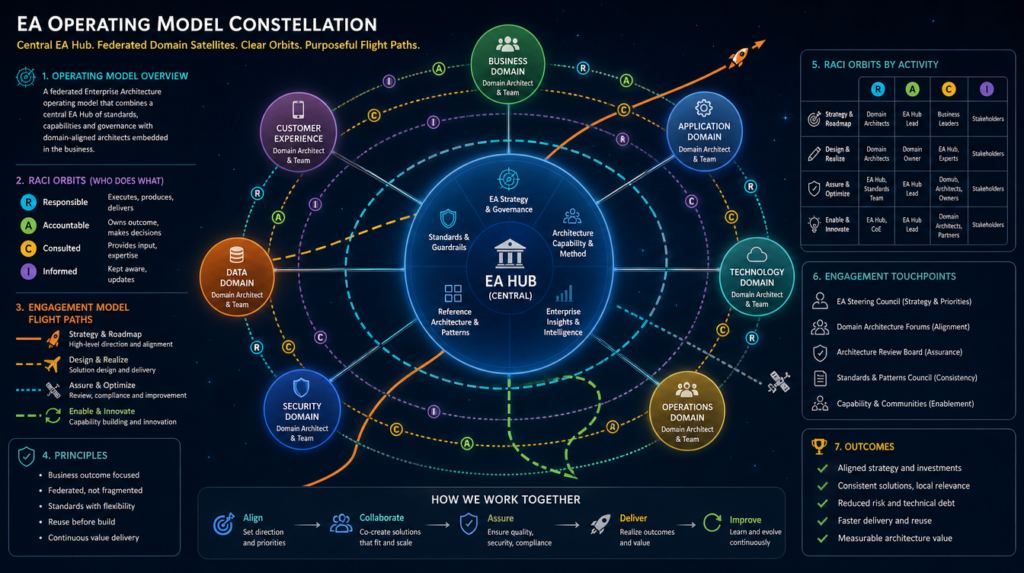
Design an EA operating model that matches decision rights, funding, and organizational complexity. Centralized, federated, and hybrid patterns with RACI.
EA Operating Model Design Read More »
TOGAF (The Open Group Architecture Framework) is a widely adopted standard for developing and governing Enterprise Architecture. It provides methods, tools, and vocabulary—most notably the Architecture Development Method (ADM)—to help organizations design, plan, implement, and sustain architecture at enterprise scale.
The four commonly recognized architecture domains—Business, Data, Application, and Technology—structure how enterprises describe and govern their architecture. Together they provide a complete view from capabilities and processes through information, software, and infrastructure.
What are the four architecture domains? Read More »
An architecture framework provides methods, structures, and guidance for creating and using enterprise architecture.
Architecture Framework Read More »

Effective architecture governance accelerates decisions, reduces risk, and earns stakeholder trust. Design ARBs, standards enforcement, and metrics that work in practice.
Architecture Governance That Actually Works Read More »
Enterprise Architecture addresses the full spectrum of business and IT alignment across domains and portfolios. Technical Architecture focuses on the design of technology infrastructure, platforms, and engineering patterns that enable application delivery.
What is the difference between Enterprise Architecture and Technical Architecture? Read More »
Enterprise Architecture defines the enterprise-wide context, standards, and direction within which individual solutions must fit. Solution Architecture designs specific systems or products that deliver defined capabilities within project scope, budget, and timeline.
What is the difference between Enterprise Architecture and Solution Architecture? Read More »
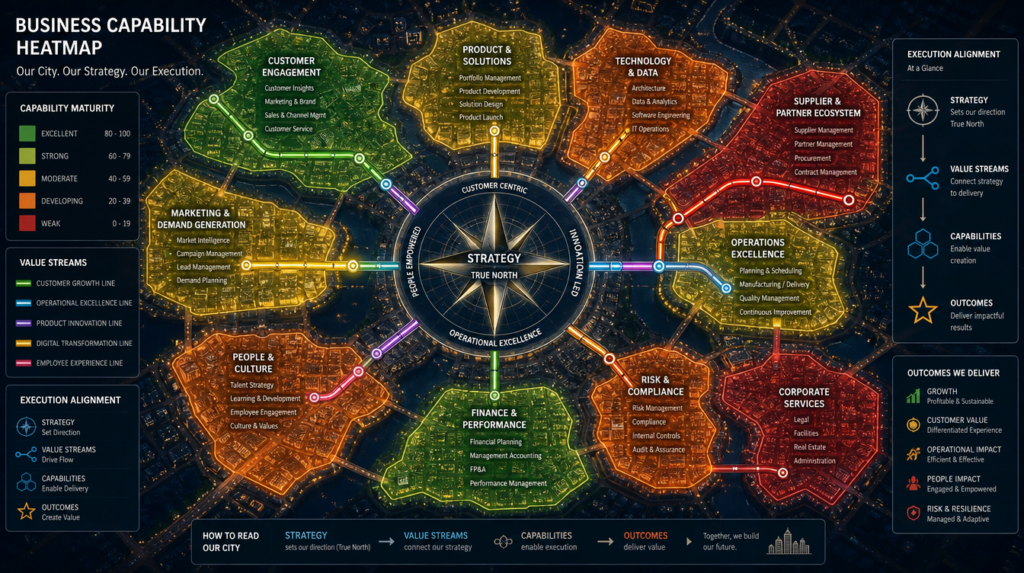
Business architecture translates strategy into capabilities, value streams, and investments IT can execute. Learn BIZBOK-aligned methods, heatmaps, and operating cadences that engage executives.
Business Architecture: From Strategy to Execution Read More »